LearnARcade
Navigating learning experiences for dyslexic adults
LearnARcade, a mock learning tool, was conceived to validate the potential of AR systems. It employs user experience strategies tailored to dyslexic adults and incorporates engagement strategies to encourage sustained usage.
Design thinking pointed at AR. That wasn't enough to act on.
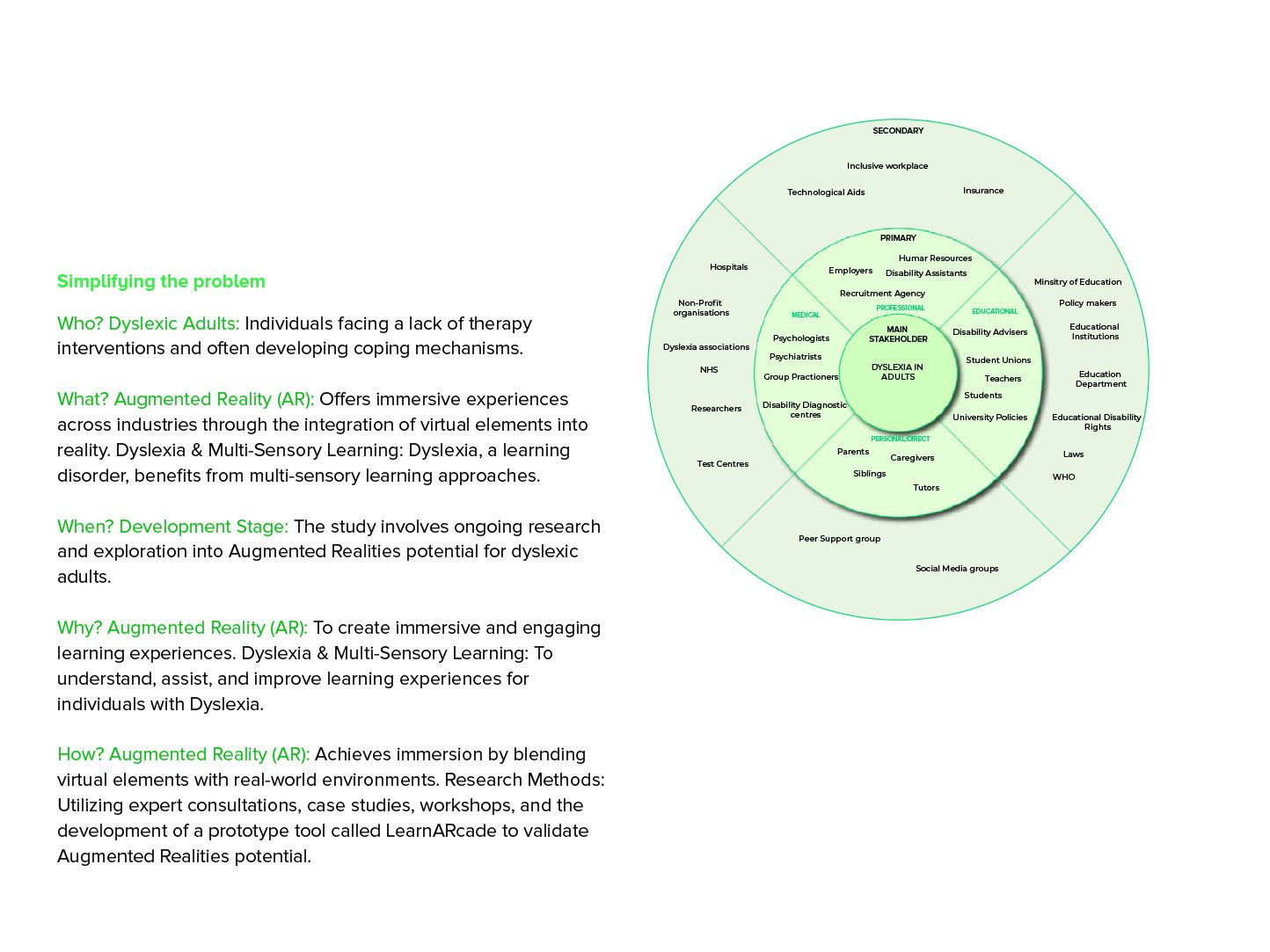
The initial approach highlighted a promising role for augmented reality in multi-sensory learning. But to develop an intervention that genuinely improves the well-being of adults with dyslexia, a deeper understanding was needed — of their challenges, of how effective MSL actually is, and of how AR should be applied. That holistic comprehension is what makes a targeted solution possible rather than a plausible-sounding one.
- ARAugmented Reality
- MSLMulti-Sensory Learning
- UXUser Experience
How might we create a new learning experience with AR and MSL techniques for dyslexic adults, while creating an immersive experience?
A third diamond, added on purpose.
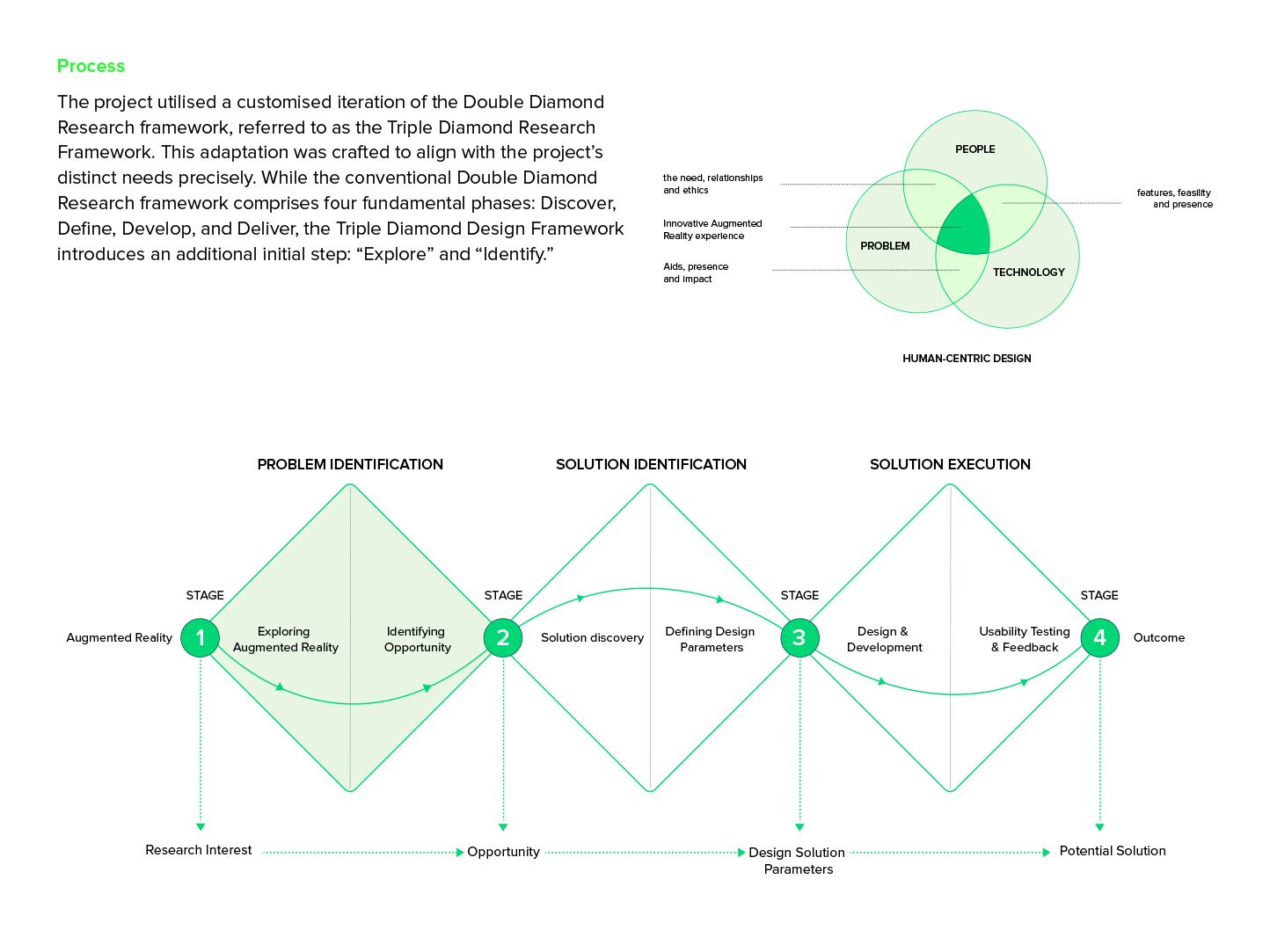
The project uses a customised iteration of the Double Diamond, referred to here as the Triple Diamond Research Framework, synergised with a User-Centred Design framework. The combination introduces a structured process to the research phase specifically — which is where an intervention for a group this often misunderstood either earns its evidence or doesn't.
Case study work sits inside a non-disclosure agreement, so pseudonyms are used with limited access. One case study is public and load-bearing: Pokémon Go, with over 100 million downloads and 28.5 million active users worldwide, and the wave it inspired in Jurassic World Alive and Ingress. What it demonstrates is that AR integration plus social incentives can hold attention at scale — the exact problem a learning tool has.
Built as a habit, not a course.
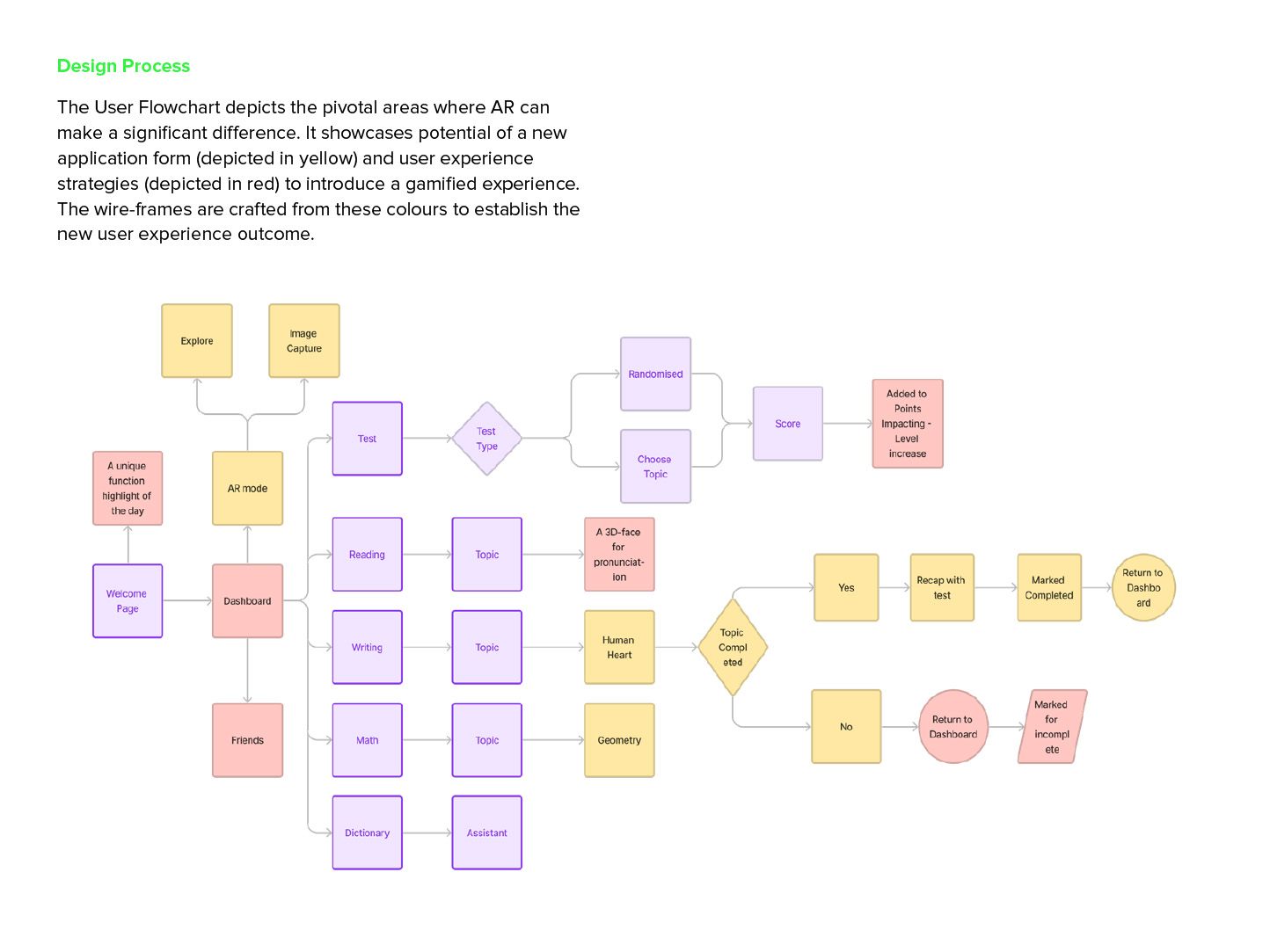
The intervention takes the form of a UX design strategy tailored to dyslexic adults, leveraging Nir Eyal's "Hooked" model — a four-stage process for habit-forming engagement. Defining the brief first meant mapping every challenge along the journey from diagnosis to receiving effective help, including the points where people slow down or abandon seeking assistance altogether.
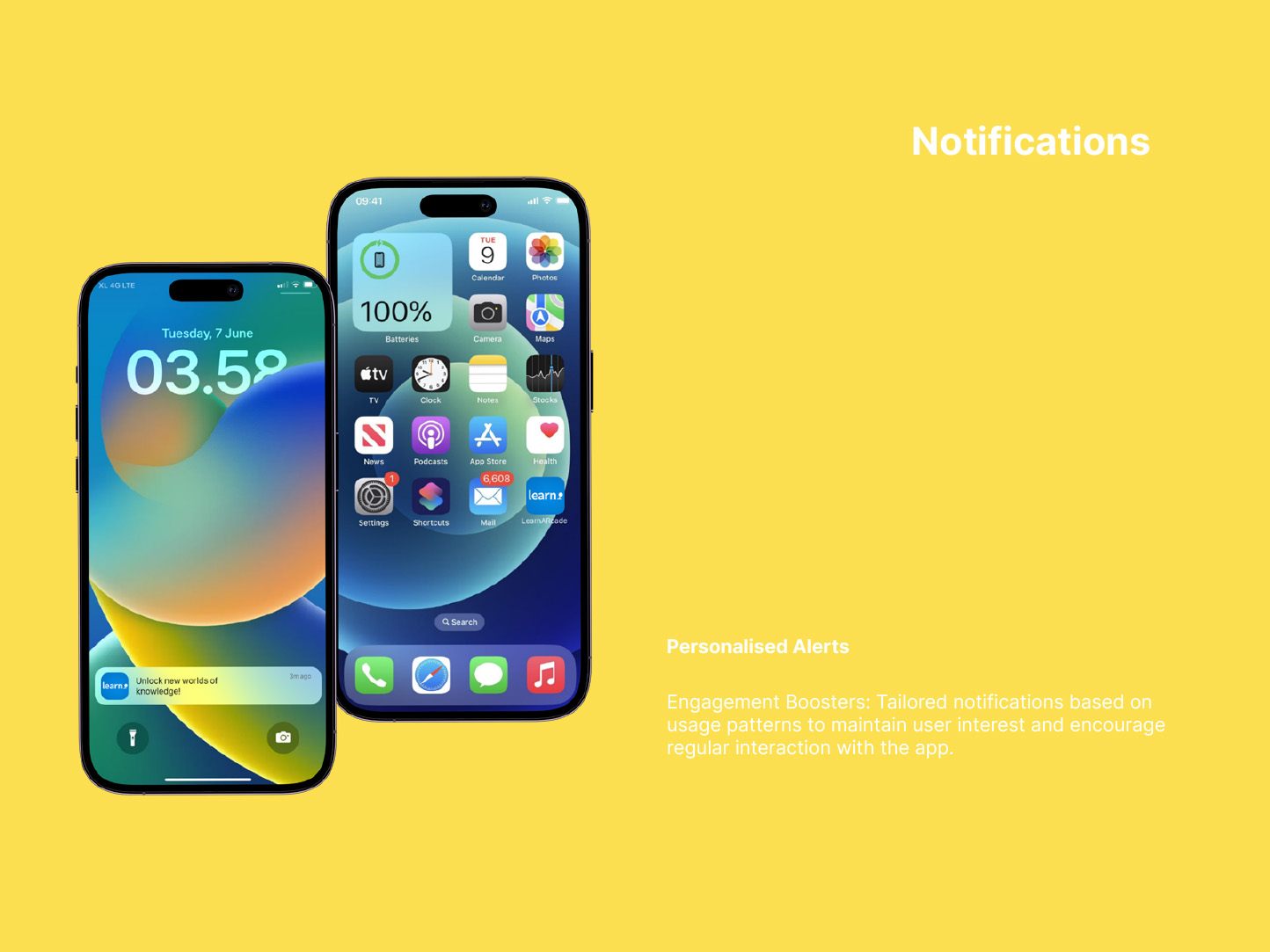
- TriggerActivates interaction, through external or internal prompts — notifications, reminders, or a personal need.
- ActionThe user does the thing the trigger intended: exploring, reading, or engaging in a learning activity.
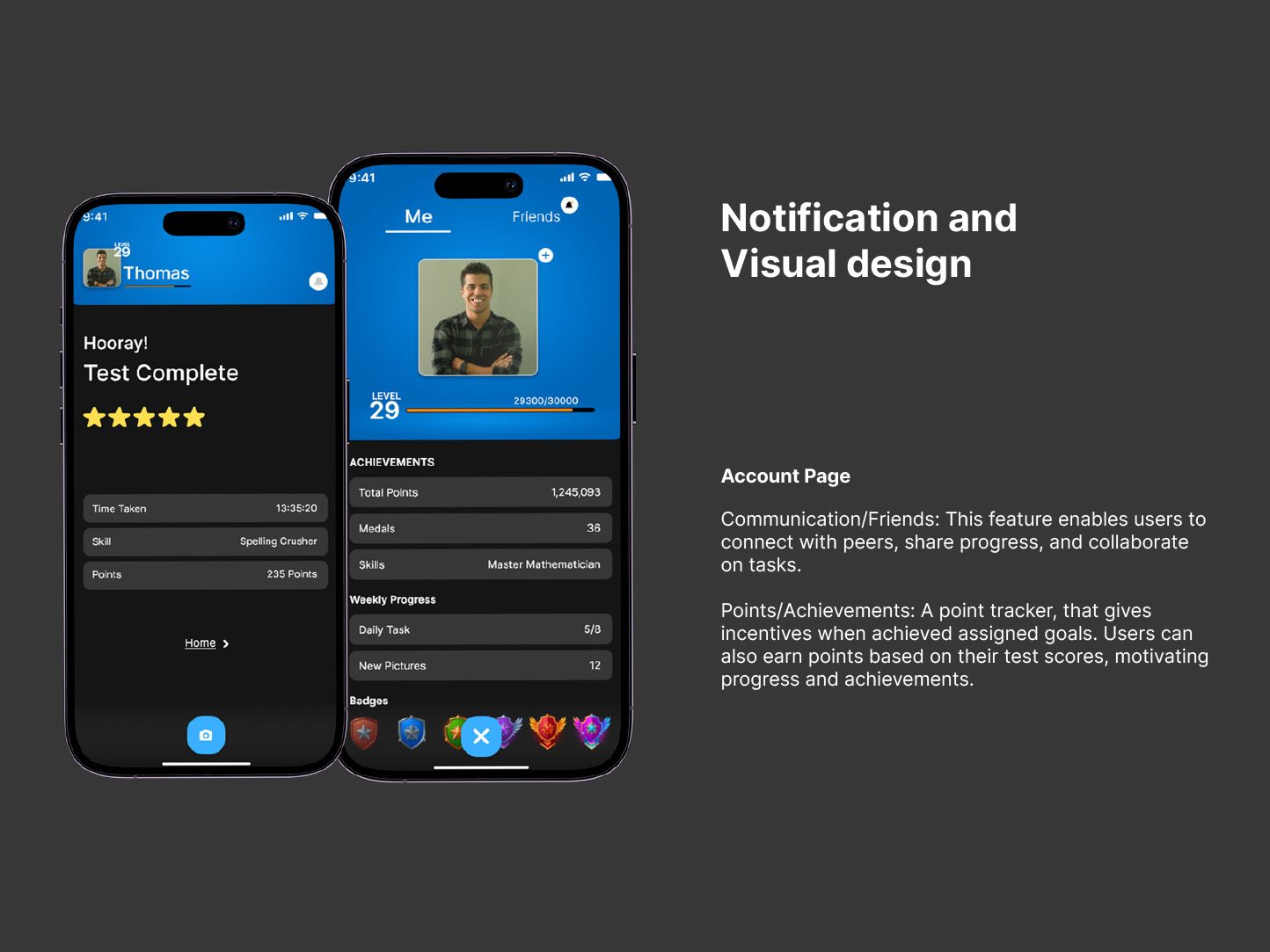
- Variable RewardProgress, achievements or personalised content, with an element of unpredictability.
- InvestmentTime, effort or personalisation put in — which deepens the connection to the product.
The solution had to be user-friendly, easily accessible and induce self-learning. Gamifying it is what makes that plausible: the reward loop does the work that motivation alone doesn't.
LearnARcade.
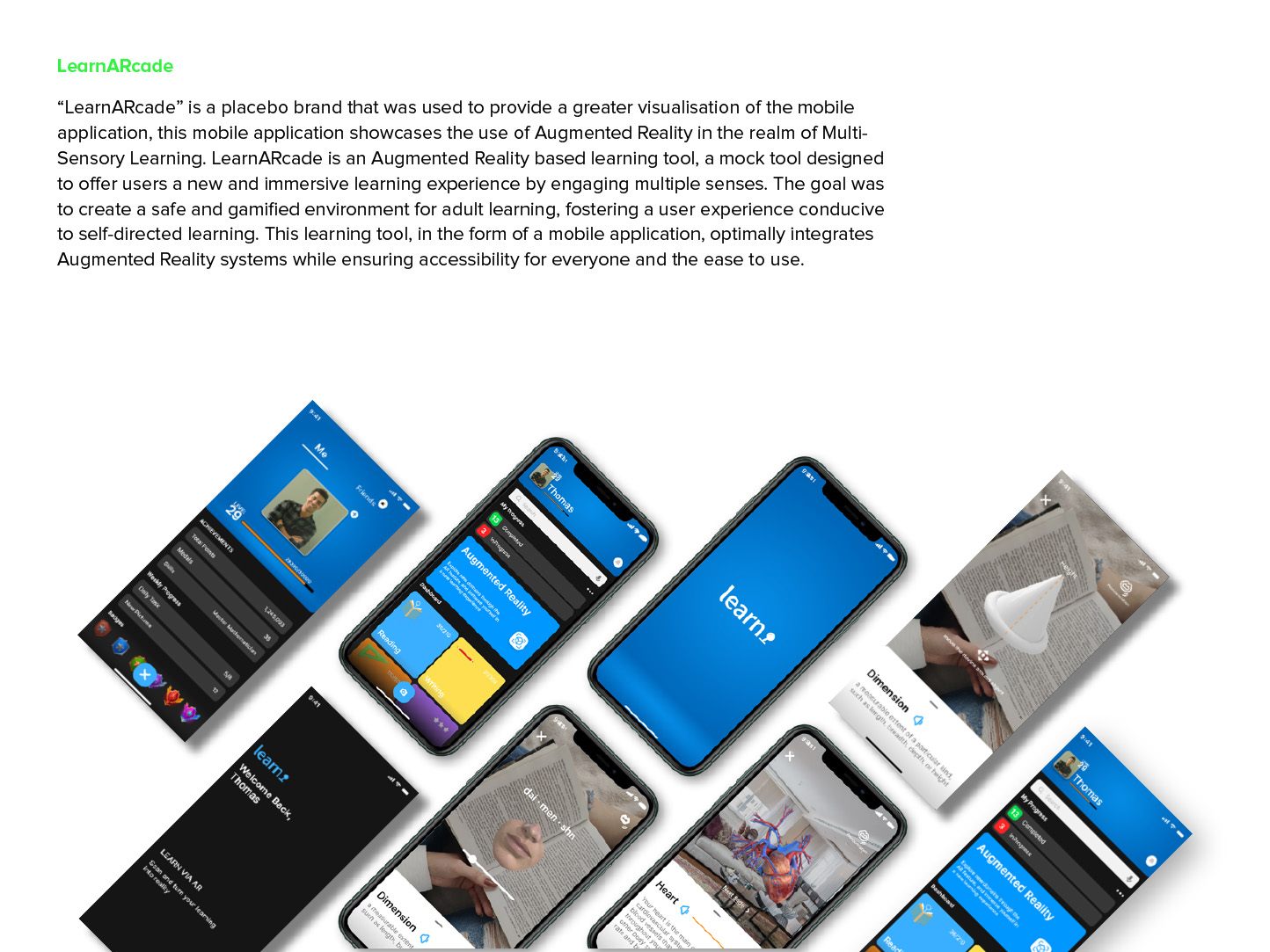
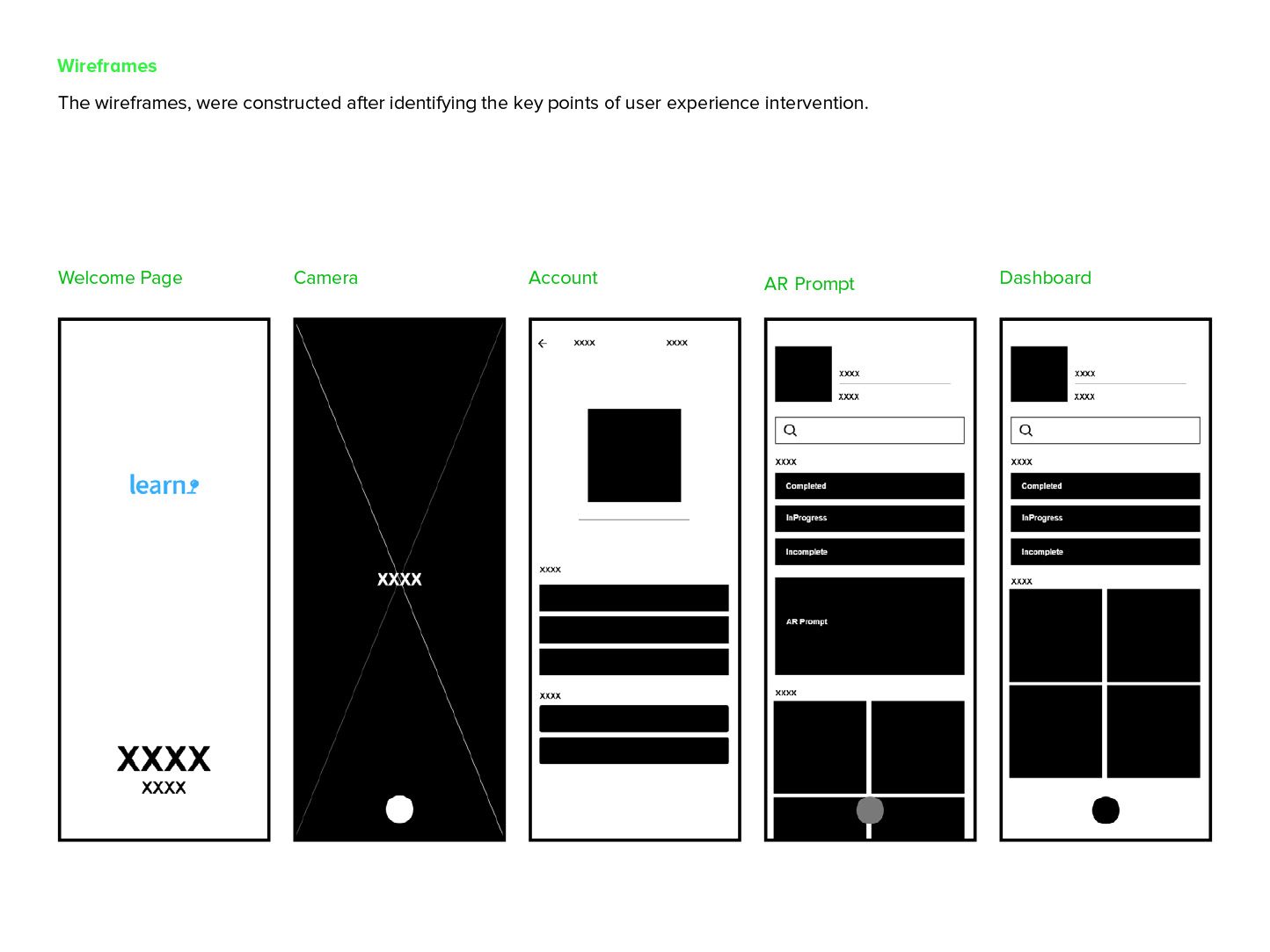
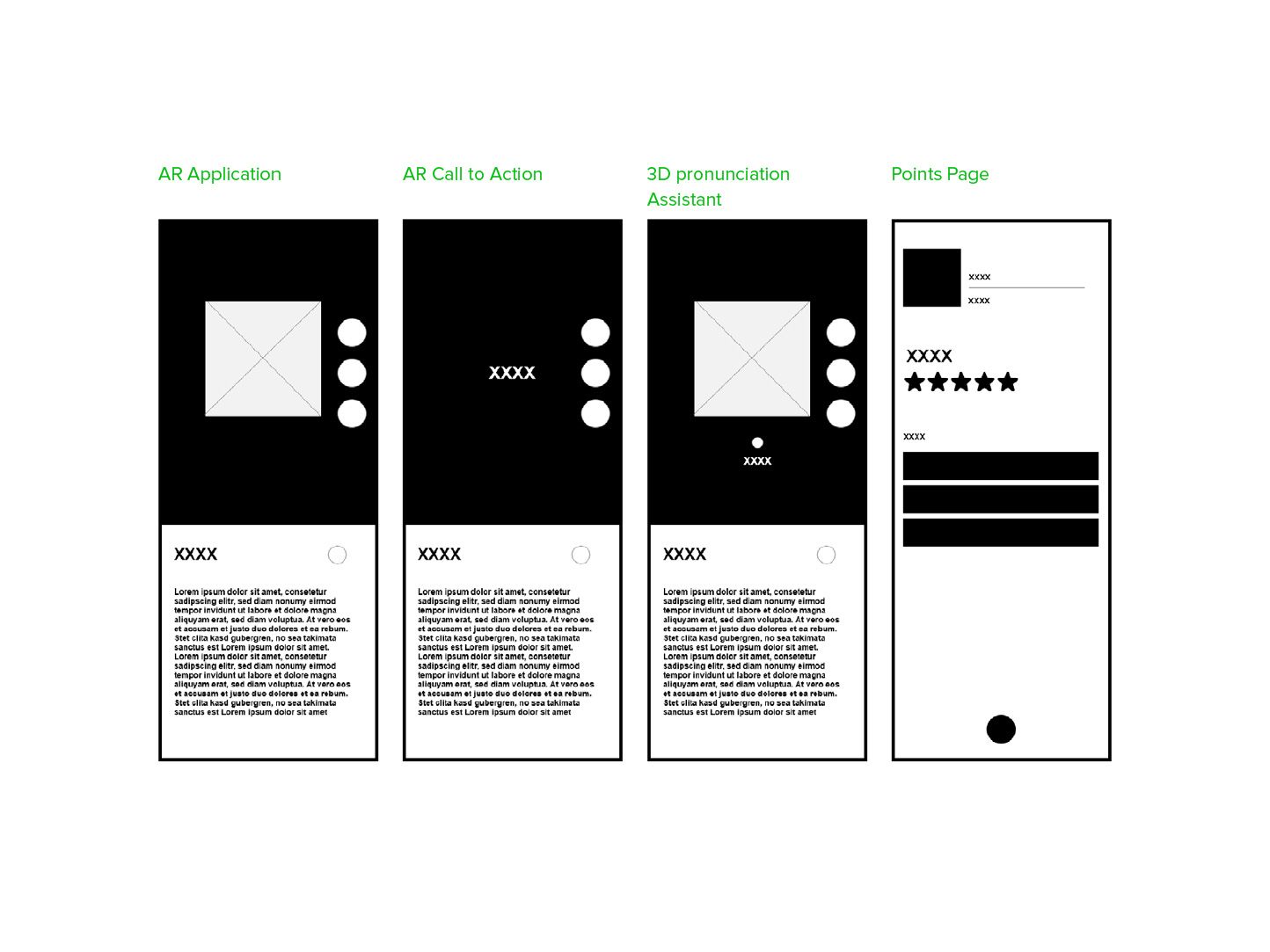
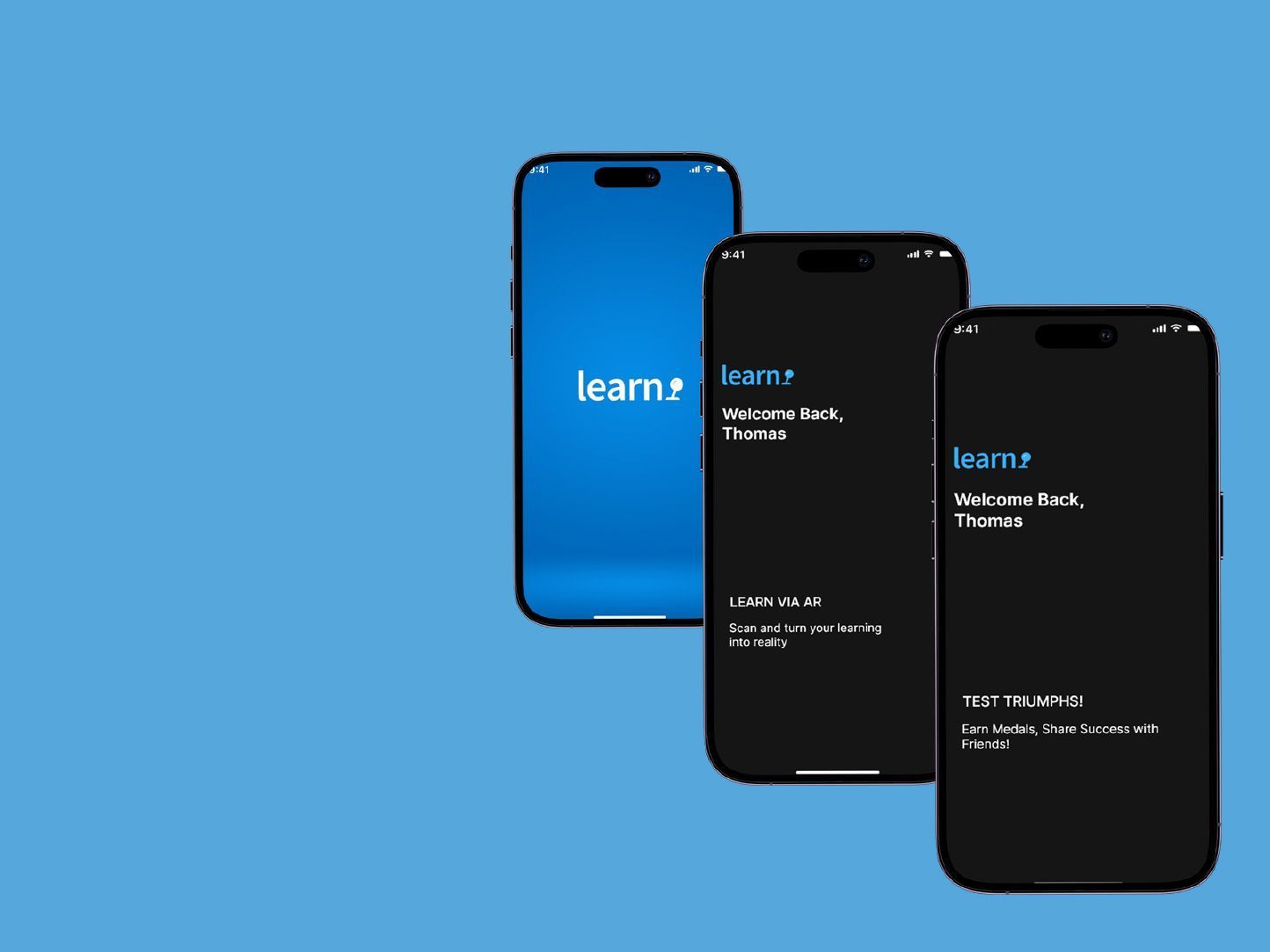
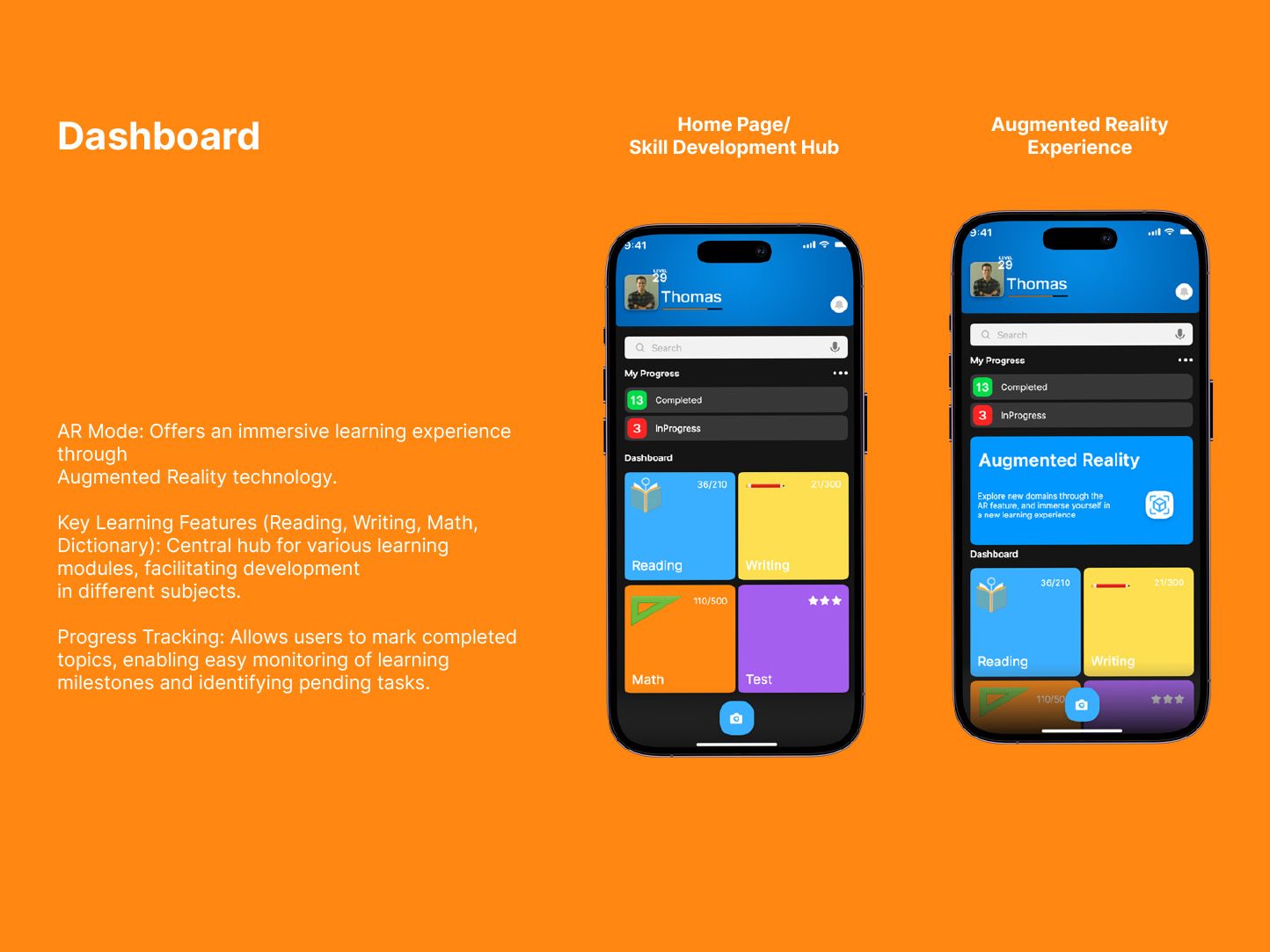
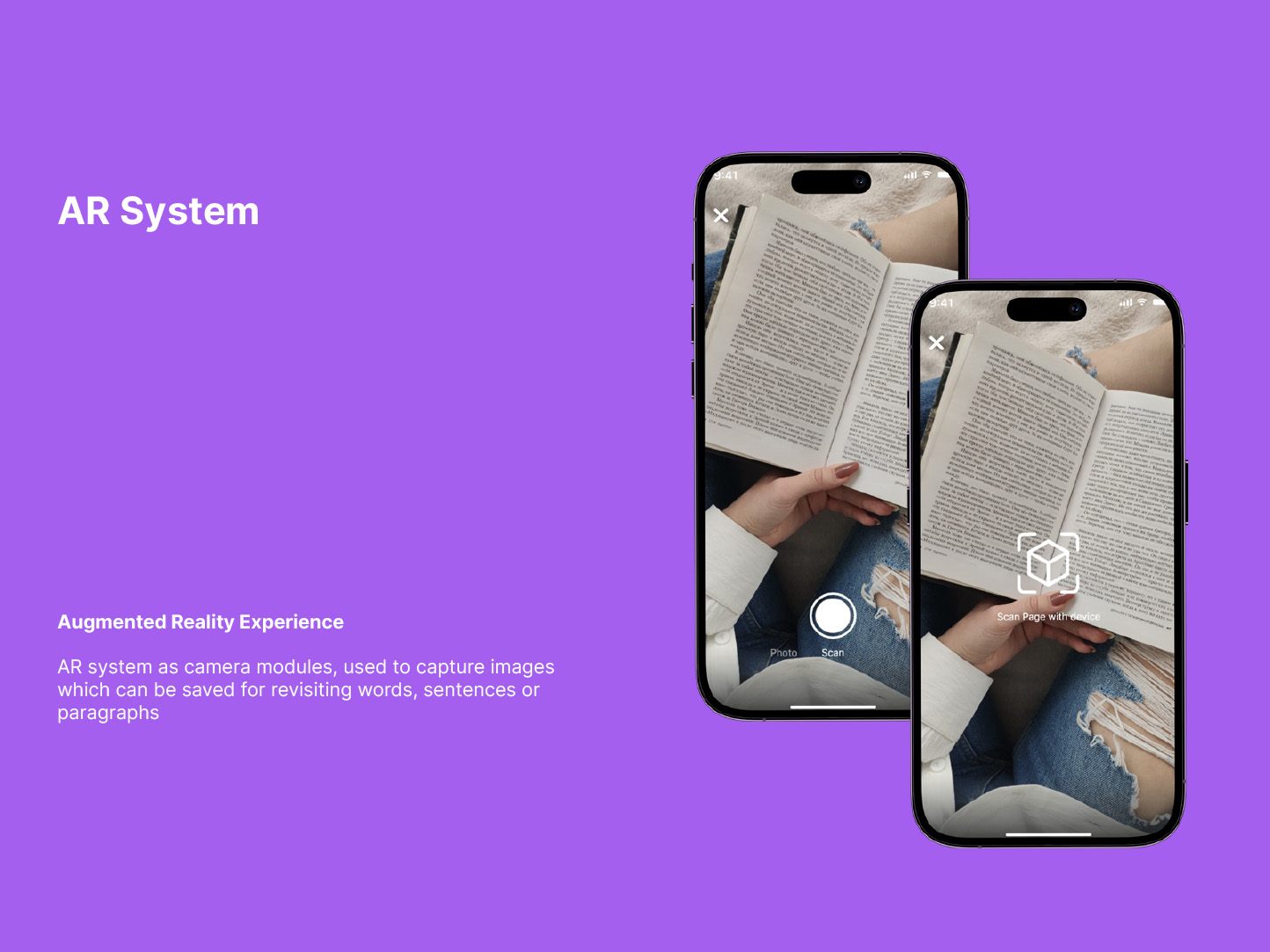
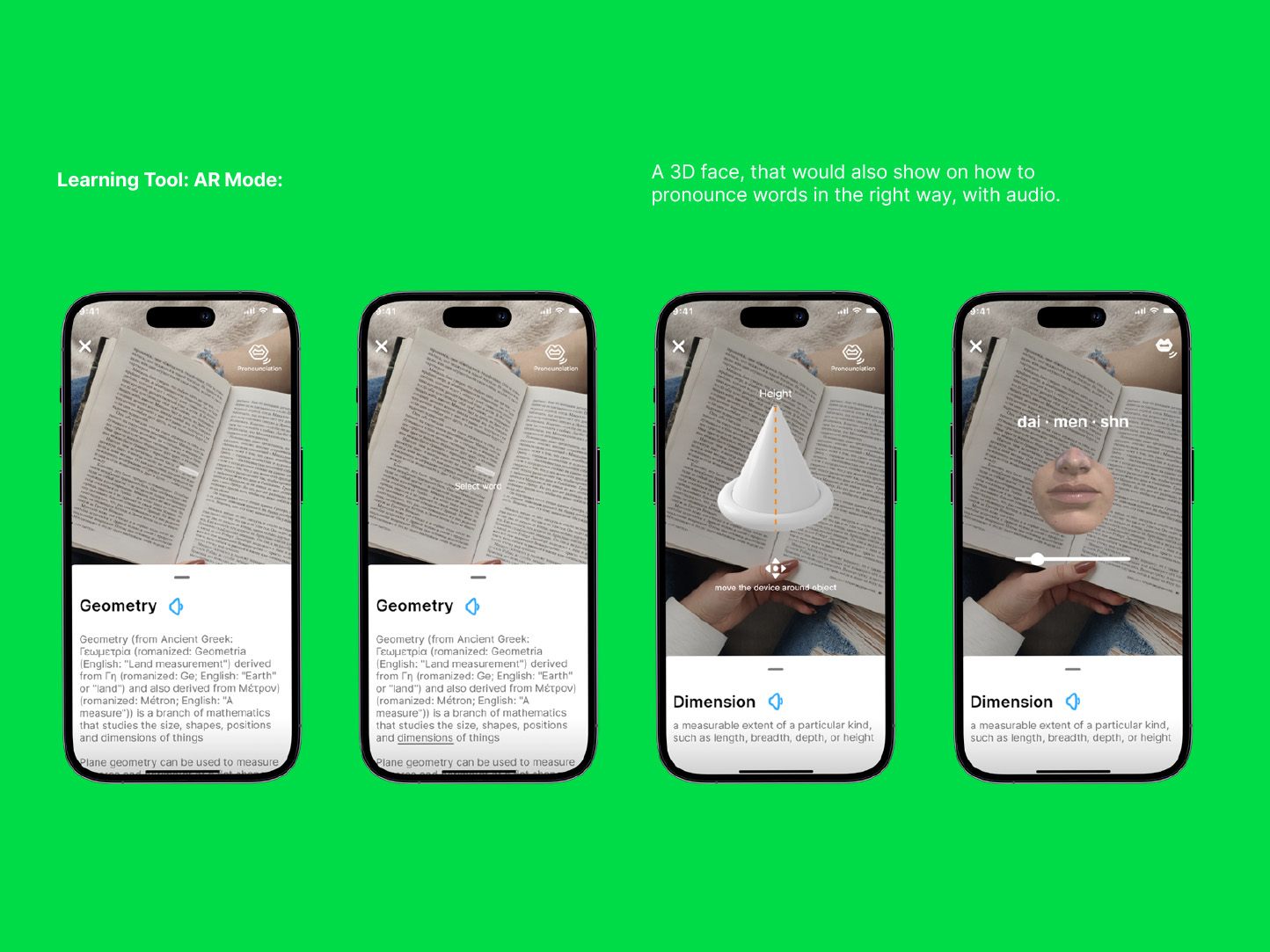
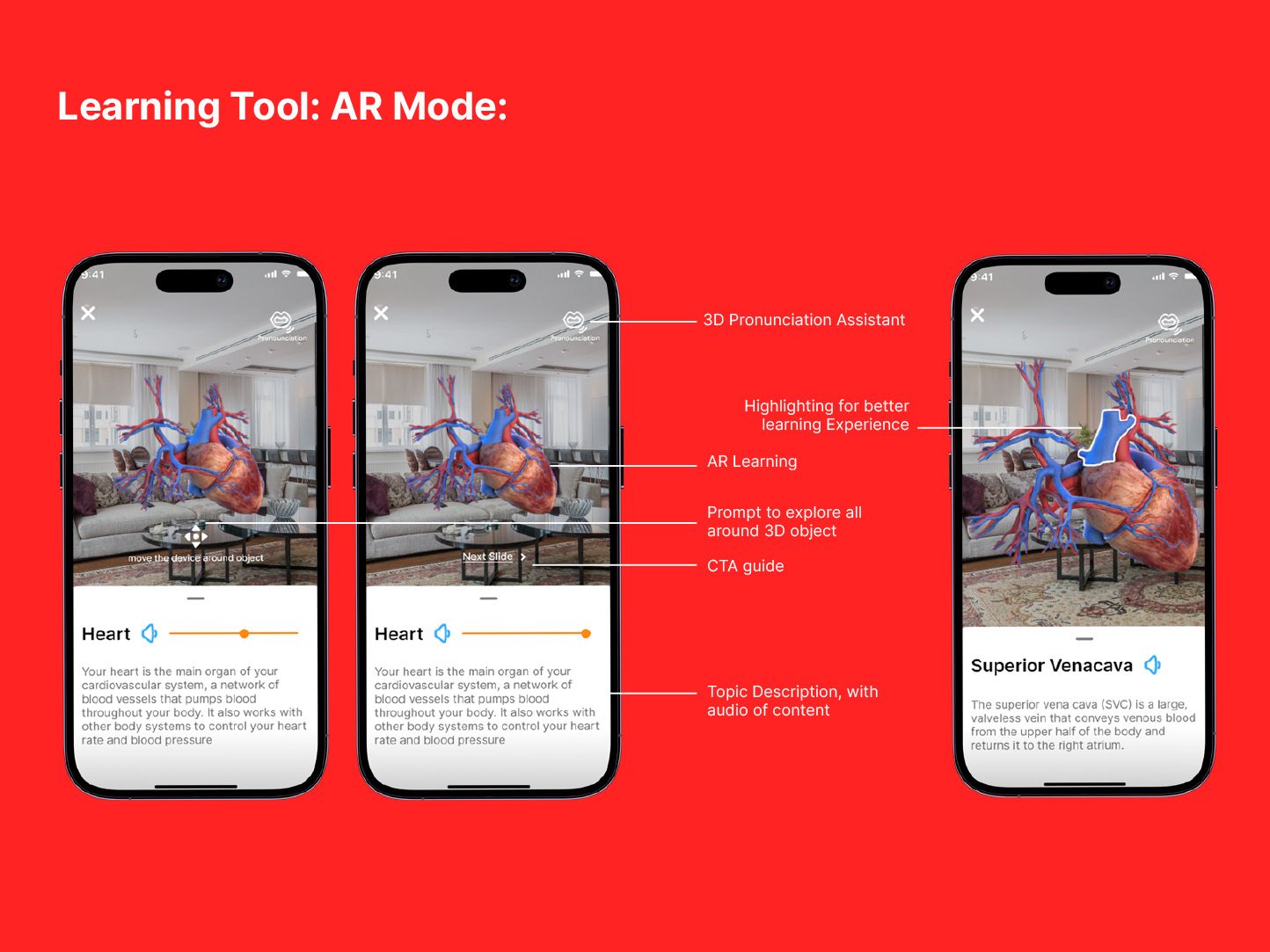
A placeholder brand name for a mobile application showcasing AR in the realm of multi-sensory learning. It is a mock tool — designed to offer a new and immersive learning experience by engaging multiple senses, in a safe and gamified environment for adult learning that is conducive to self-directed study.
The research also emphasised awareness of learning disabilities in public space. Using QR codes and smart AR-based poster designs, immersive experiences can be created that generate interest and enhance awareness well beyond the app itself.
The project aligned with several UN Sustainable Development Goals:
- Good Health & Well-Being
- Quality Education
- Industry, Innovation & Infrastructure
- Reduced Inequalities
The exploration here only scratches the surface, indicating a field that can yield substantial social impact — and the possibility of inspiring a new wave of creative projects.
What shaped the work as much as the brief did.
A non-disclosure agreement over the case study work. Pseudonyms are used with limited access, which is why the public, load-bearing evidence is Pokémon Go rather than primary fieldwork I can name.
A group that is routinely misread. Dyslexia in adults is under-researched compared with children, and much of the available material is about schooling. The Triple Diamond exists precisely because the research phase could not be treated as a formality.
A mock tool, not a build. LearnARcade is a placeholder brand for a demonstration, so the AR interactions are designed and argued rather than engineered and tested on device.
What I would do differently.
I would test the Hooked loop with dyslexic adults before committing to it. Variable reward is a powerful mechanic and an ethically loaded one — applied to a group that has often been failed by education, the line between motivating and manipulating is one I would want participants to draw, not me.
I would also narrow the scope. The project reaches for four UN Sustainable Development Goals and for public AR poster awareness alongside the app itself; a tighter claim, evidenced properly, would carry more weight than a broad one carried by argument.
Fifteen spreads, front to back.