Jumbofarms
Rice
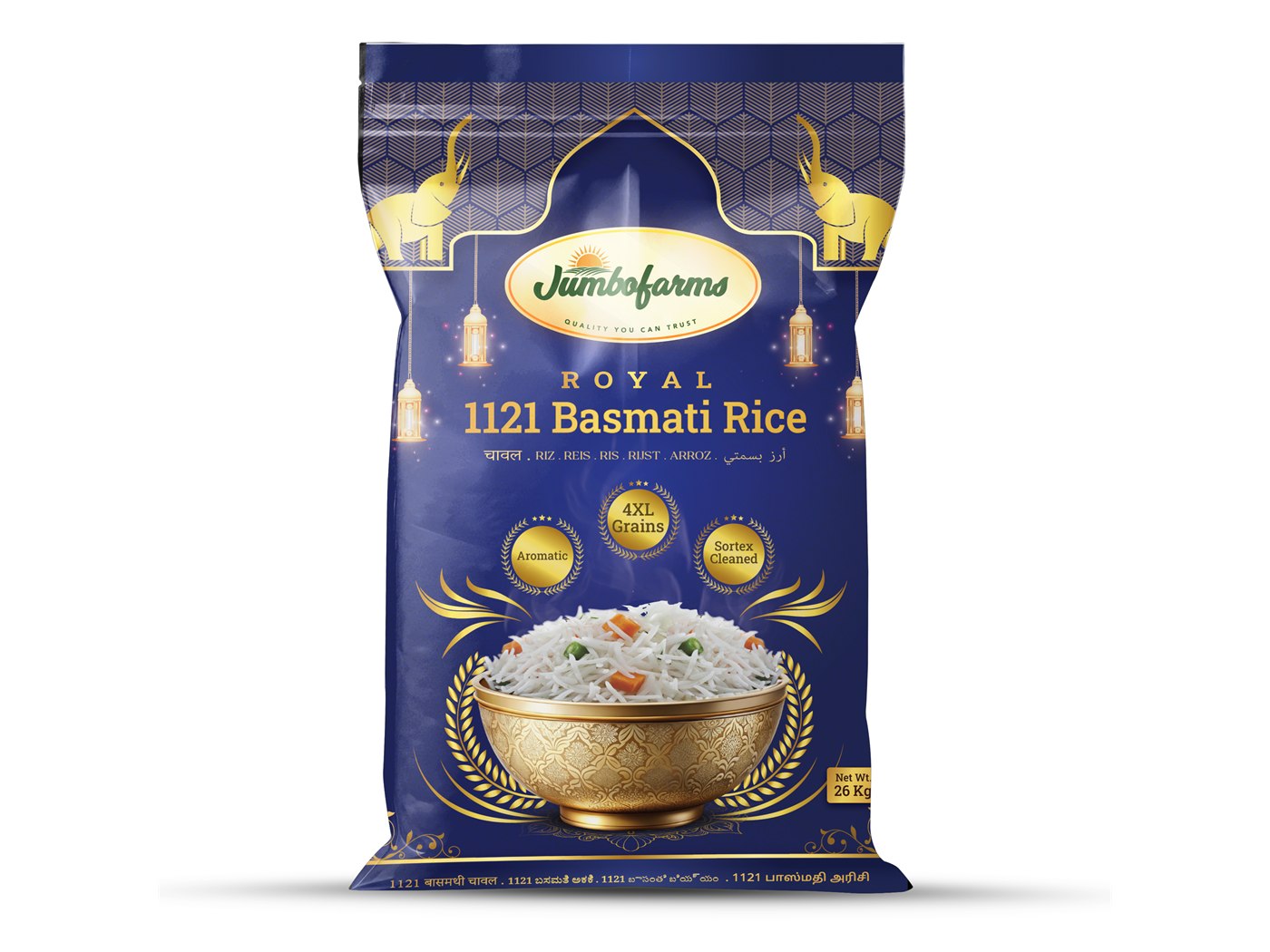
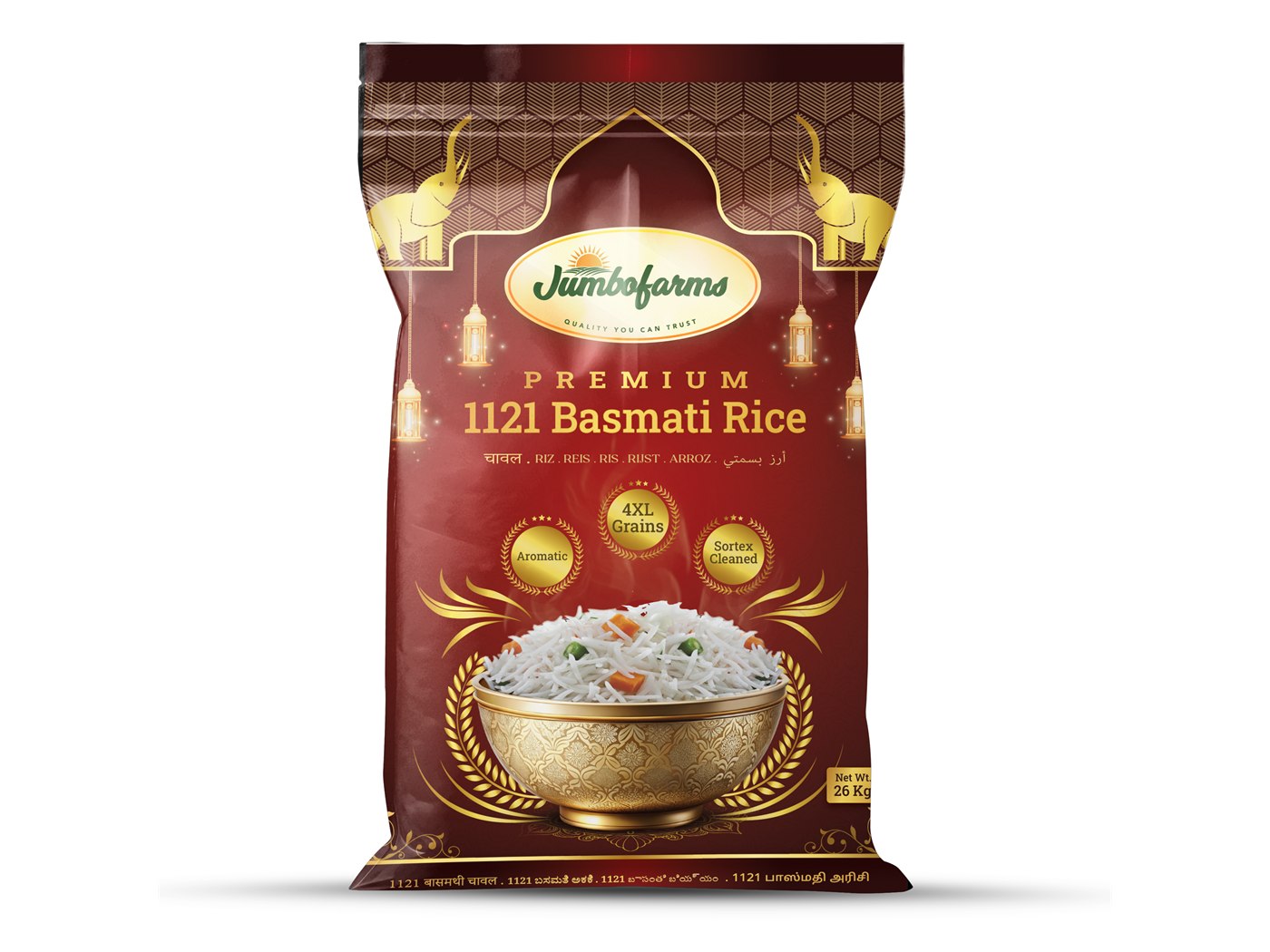
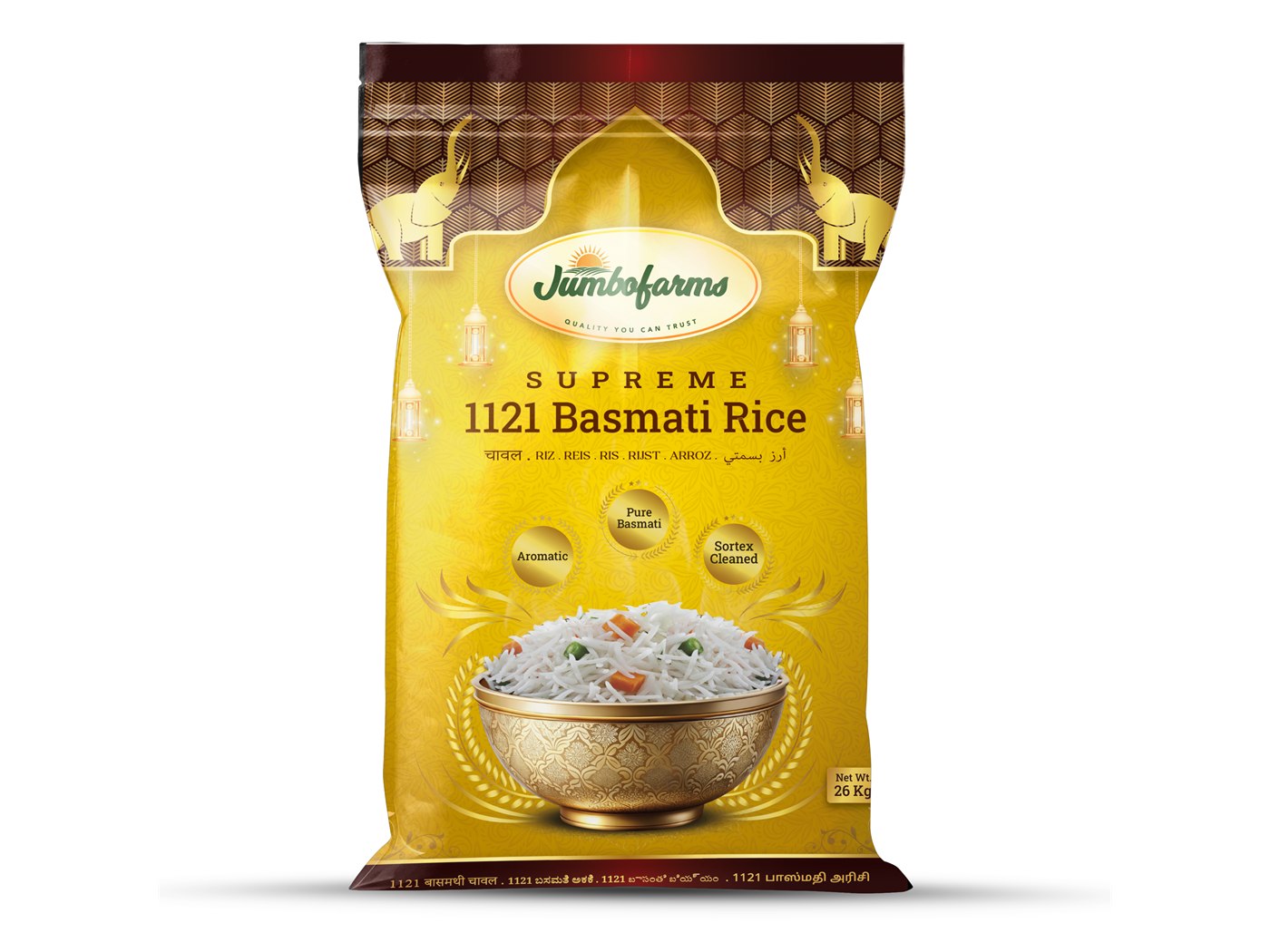
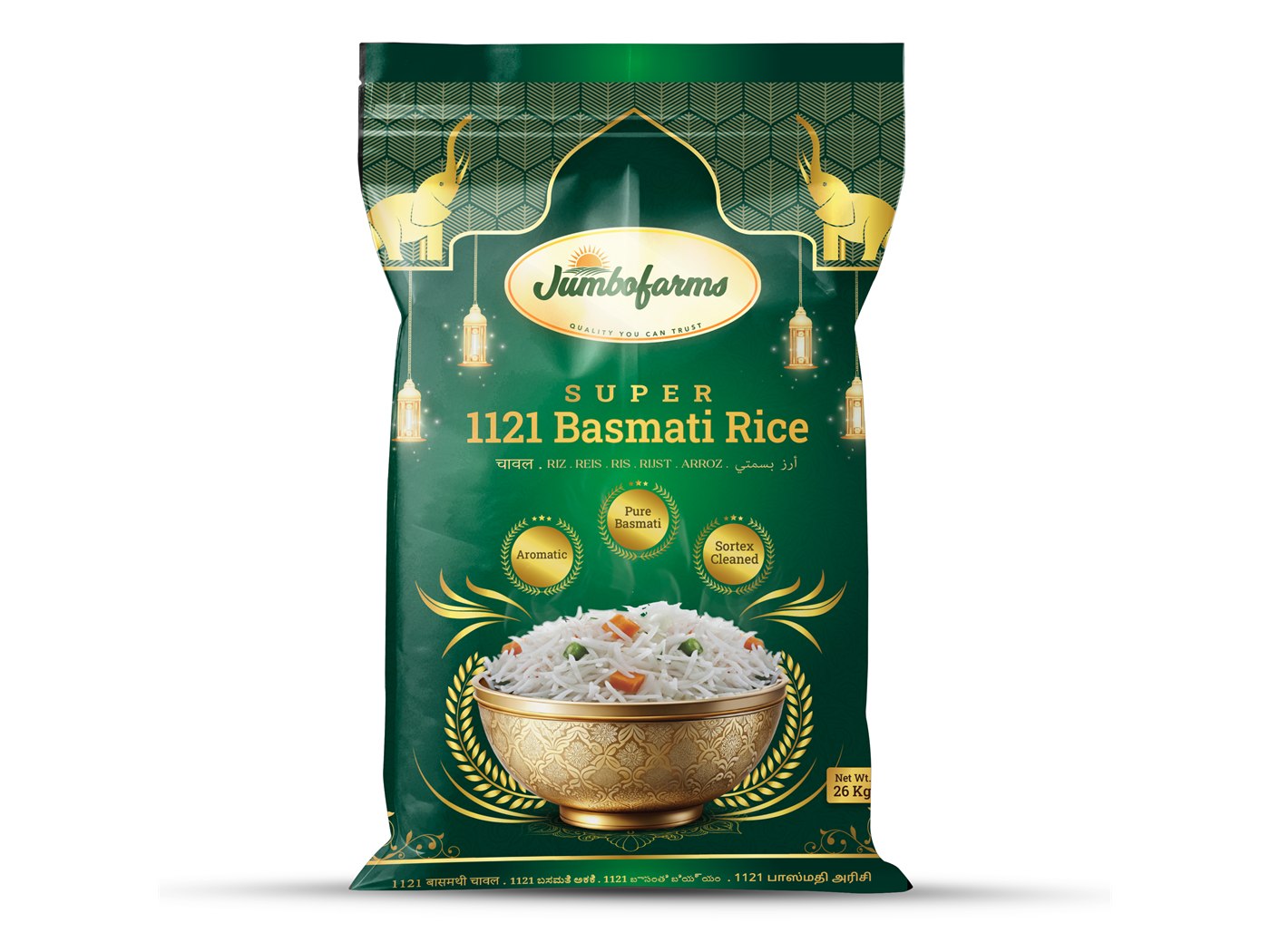
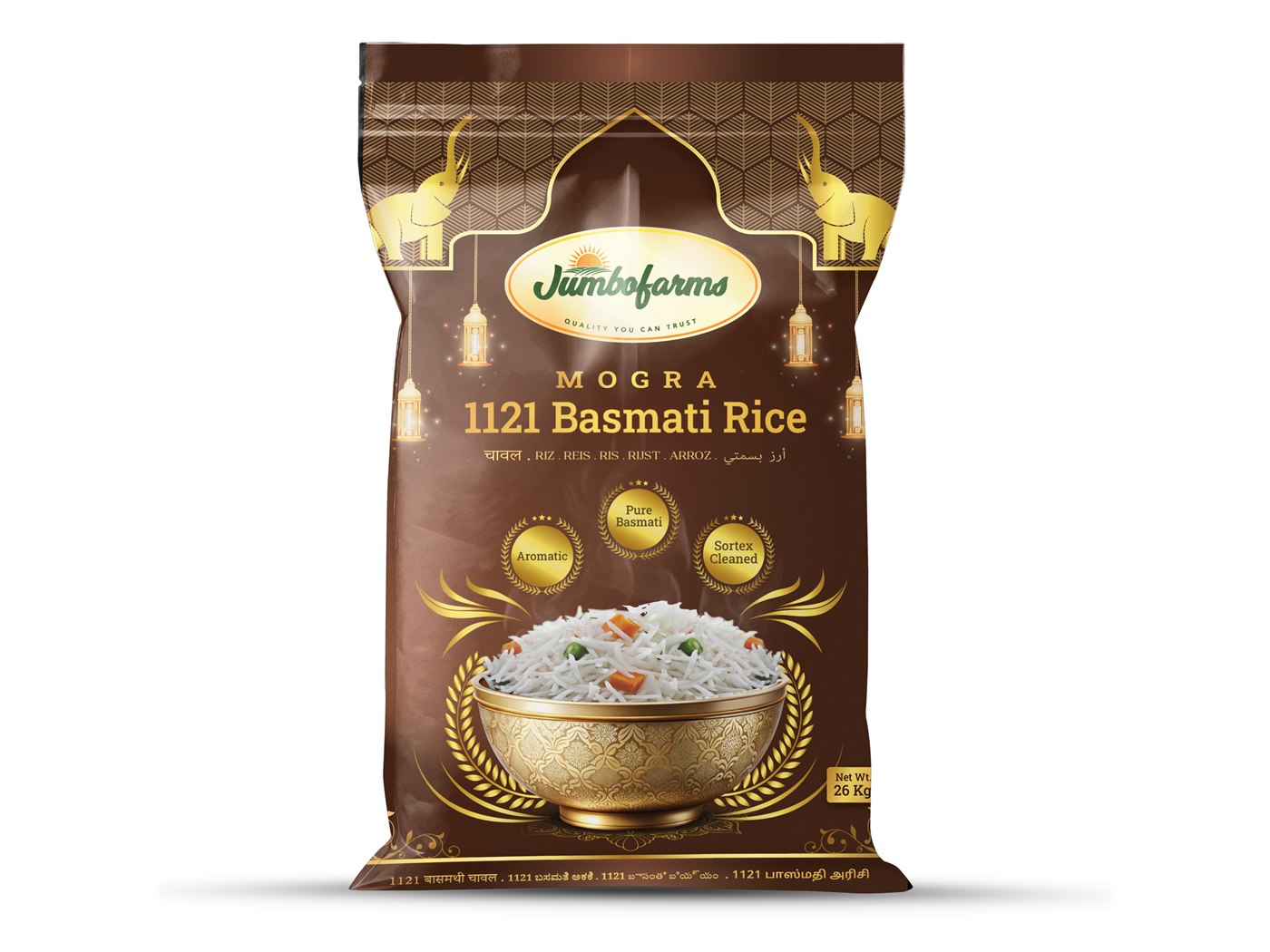
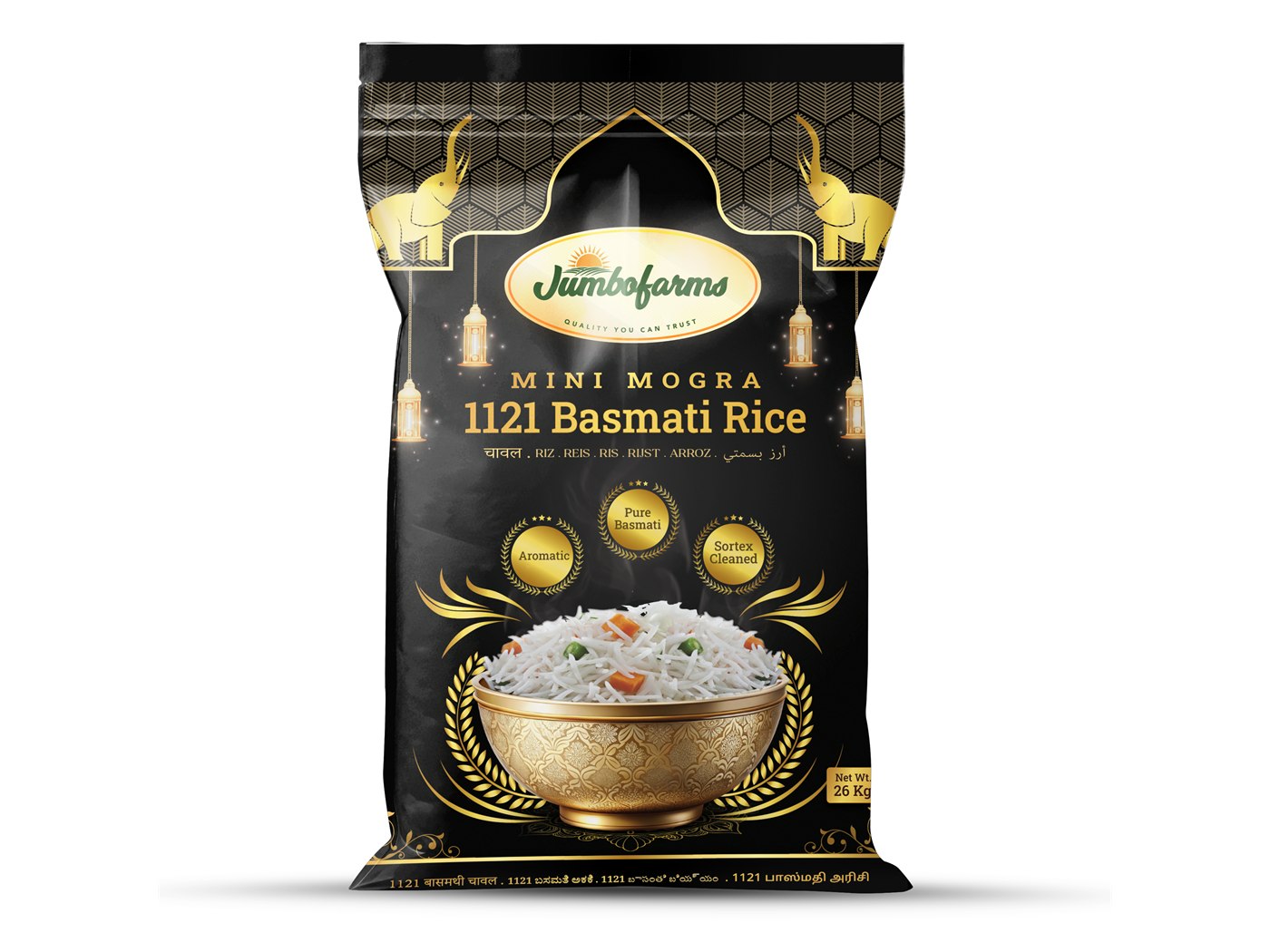
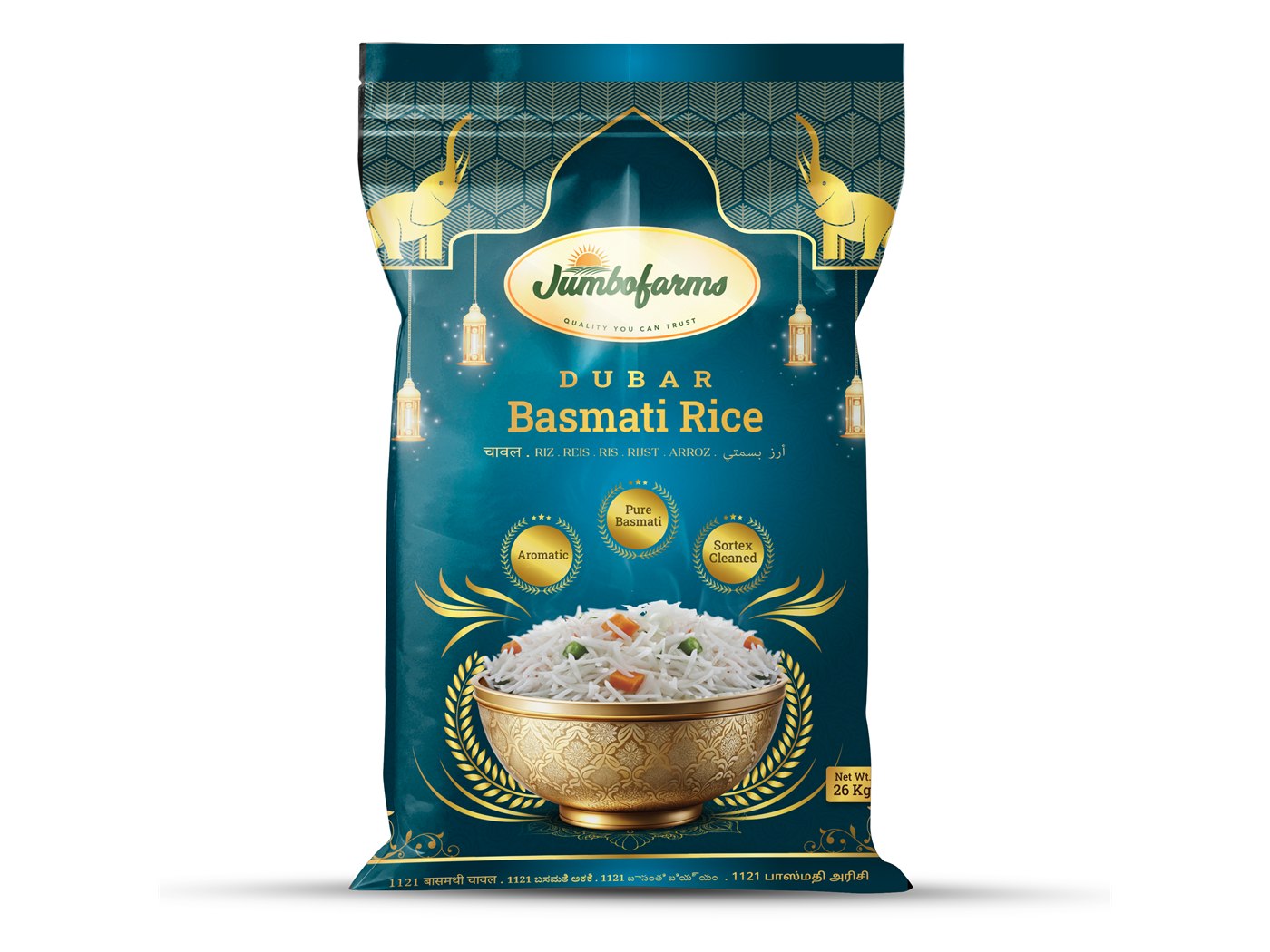
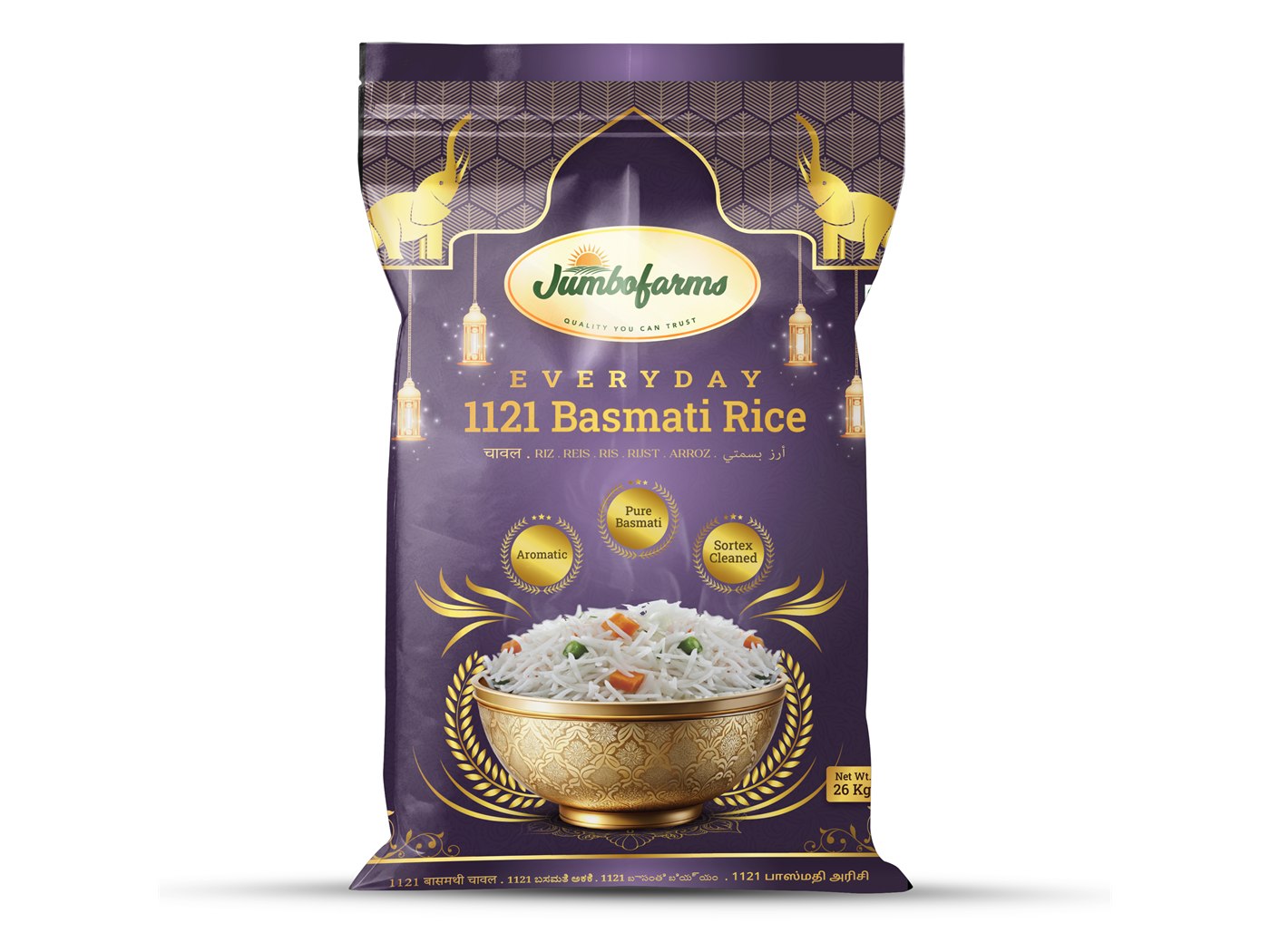
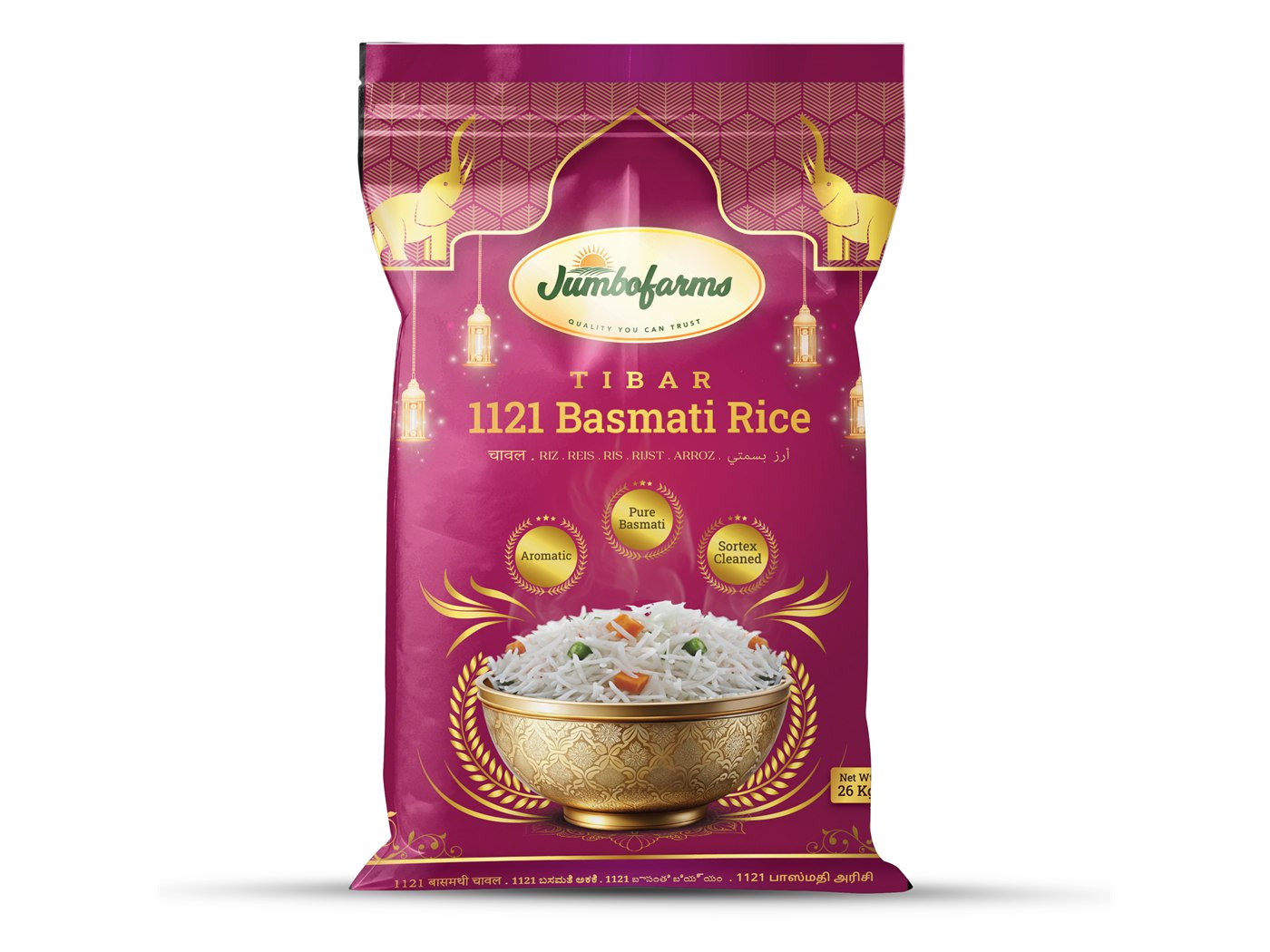
Nine grades of 1121 basmati that are, to look at, the same rice. The pack had to make the grade legible from a shelf, so the layout was fixed and colour was left to do all the work.
One layout, nine colours.
Dubar, Everyday, Mini Mogra, Mogra, Premium, Royal, Super, Supreme and Tibar. Nine grades of the same 1121 basmati, separated by grain length and breakage — differences a buyer cannot see through a sack.
So nothing about the layout moves. The arched frame, the paired peacocks, the gold cartouche holding the Jumbofarms oval, the grade name above “1121 Basmati Rice”, the brass bowl of cooked grain, the quality roundels, the script running along the top and bottom edges — all of it is fixed. Only the colour changes, and it changes completely: teal, aubergine, black, brown, oxblood, navy, green, gold, magenta.
That is what makes the range work as a set. A wholesaler stacking nine grades finds the one they want by colour alone, at a distance, without reading a word.
The half of the pack nobody art-directs.
Every grade carries the same reverse: nutrition table, cooking method icons, the green vegetarian mark, the manufacturer block, and a printed white window for batch, packing date and best-before.
Standardising it is the point. Nine separate back panels would be nine chances for a compliance detail to drift; one panel with the grade name swapped is one artwork to check.
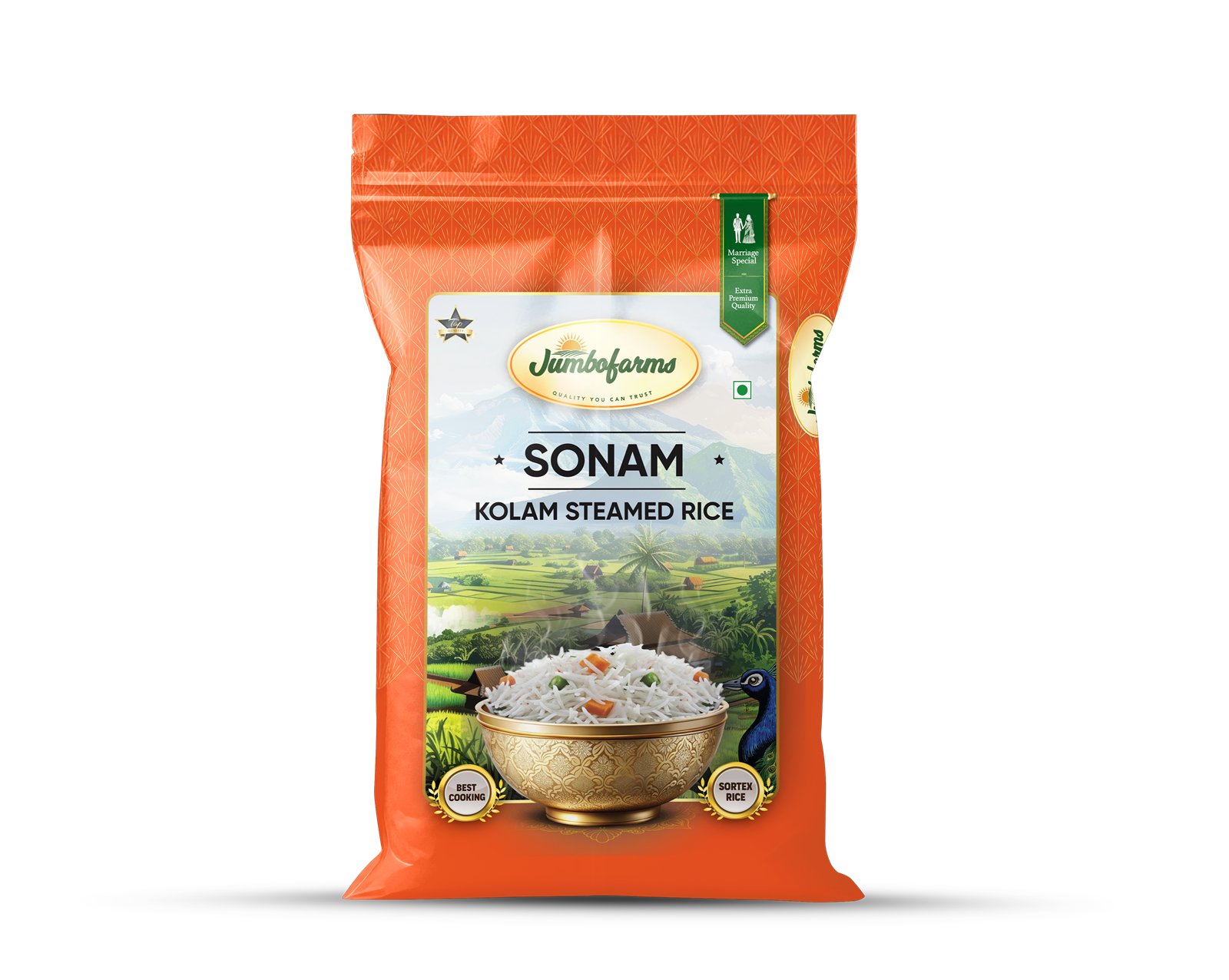
Sonam sits outside the ladder, deliberately.
Sonam Kolam steamed rice is not 1121 basmati, and it does not use the system. Orange rather than jewelled, a photographed paddy field rather than the arched frame, the variety name set plainly.
Putting it in the ladder would have implied it was a grade of basmati. Breaking the system is how the pack says it is a different thing.
10 pieces of artwork.